

A Lesbian Film Trailblazer Remembered: ‘Barbara Forever’ Wins In Berlin
Honored with the Teddy Award in Berlin, the documentary reasserts Barbara Hammer’s place in the canon of queer cinema.
Featured image by The Estate of Barbara Hammer
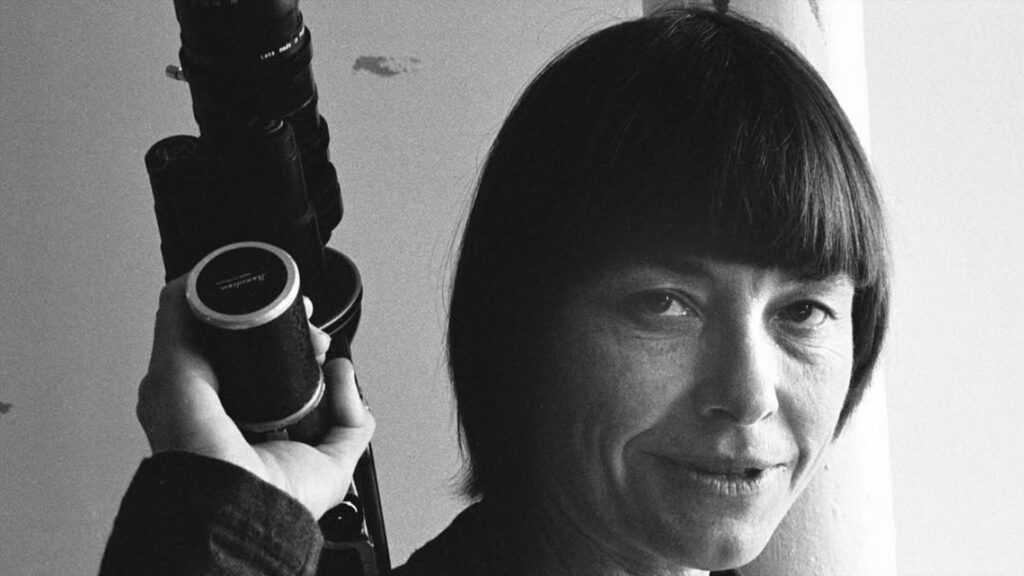
At this year’s Berlin International Film Festival, the Teddy Award for Best Documentary went to Barbara Forever, a feature that revisits the life and work of pioneering lesbian filmmaker Barbara Hammer. Directed by Brydie O’Connor, the film arrives amid the 40th anniversary of the Teddy Award, one of the most prominent honors dedicated to LGBTQ+ cinema.
Founded in 1987, the Teddy was created to elevate queer films at the festival, also known as the Berlinale. Over four decades, it has helped push LGBTQ+ stories beyond niche audiences and into international critical conversation.
Born in Los Angeles in 1939, Hammer was raised by a mother who imagined her as a future child star. That ambition never materialized. Instead, Hammer married a man at 22 and followed a conventional path until she came out at 30. “I was born when I became a lesbian,” she says in the documentary.
Related: The LGBTQ Films To Watch At Sundance 2026
What followed was a prolific period of experimental filmmaking. In the 1970s, Hammer began producing works that highlighted lesbian desire, nudity, and erotic intimacy, at a time when such images were largely absent from screens. “I’m creating a lesbian history in a world where we’re invisible,” Hammer says early in the film.
O’Connor’s engagement with Hammer began as an academic pursuit. Nearly a decade ago, while writing a thesis on Hammer’s ’70s films, she encountered a different kind of invisibility.
“I was in school and I was writing my thesis on her filmography of the ‘70s… and I couldn’t access her films anywhere,” O’Connor said at a recent talk about the film. “I couldn’t find them online or in the library system. And so, I reached out to Barbara directly and she sent me her DVDs… I met her a few times in New York, but when she passed, I reached out to her widow, Florrie Burke, to send my condolences and to let her know how much she meant to me and my own trajectory. And Florrie and I became quite close and have been collaborating on different iterations of the Barbara Hammer project since.”
That collaboration included the 2022 short Love, Barbara, centered on Hammer’s partner, Florrie Burke. While working with Burke to digitize Hammer’s archive, O’Connor uncovered extensive audio recordings and interviews.
“I really wanted Barbara to be able to tell her own story. She talked about everything. She recorded everything. So that was really the genesis, the core idea of Barbara Forever… that Barbara was the expert on her own life and career. And I think in that way, the short can exist in conversation with the feature. Now, it feels additive.”
The documentary also explores the tensions Hammer navigated throughout her career.
“Barbara constantly felt the tension between being a lesbian filmmaker and making lesbian work and also making avant-garde work,” O’Connor said. “She really didn’t feel like she fit neatly into either lane or into either community — artistic community or queer community. She says she felt like [lesbians] wanted to see reality cinema and weren’t as interested in her experimentation, and experimental film [in general]. And she says the experimental film community was male-dominated, and she found that it was a challenge for people in the art world to care about not only lesbians, but a nude woman’s body on screen, which was certainly a through line in Barbara’s work.”
Related: Hollywood Erased Lesbian Activist Sally Gearhart: New Documentary ‘Sally!’ Corrects The Record
Over time, Hammer’s persistence brought recognition. She was included in multiple Whitney Biennials, received a month-long retrospective at the Museum of Modern Art in 2010, and saw her archive acquired by Yale University’s Beinecke Rare Book and Manuscript Library in 2017.
O’Connor says Hammer’s example remains relevant.
“I think that there’s certainly more representation of queer life and queer bodies in the media today, but I think what’s so fascinating and so singular about Barbara’s work is that it’s so personal,” O’Connor told Deadline. “I’ve been saying about this project that the personal is not only political, but the personal is historical. And I think it’s so important — it’s more important now than ever — for us as queer artists and women and creative risk takers, really each of us, to continue making work that feels so true to what we want to express or what we want to explore, ask questions about. That incredibly personal lens is always going to be something that is urgently needed.”