


19 States Join To Fight Federal Threat To Youth Gender-Affirming Care
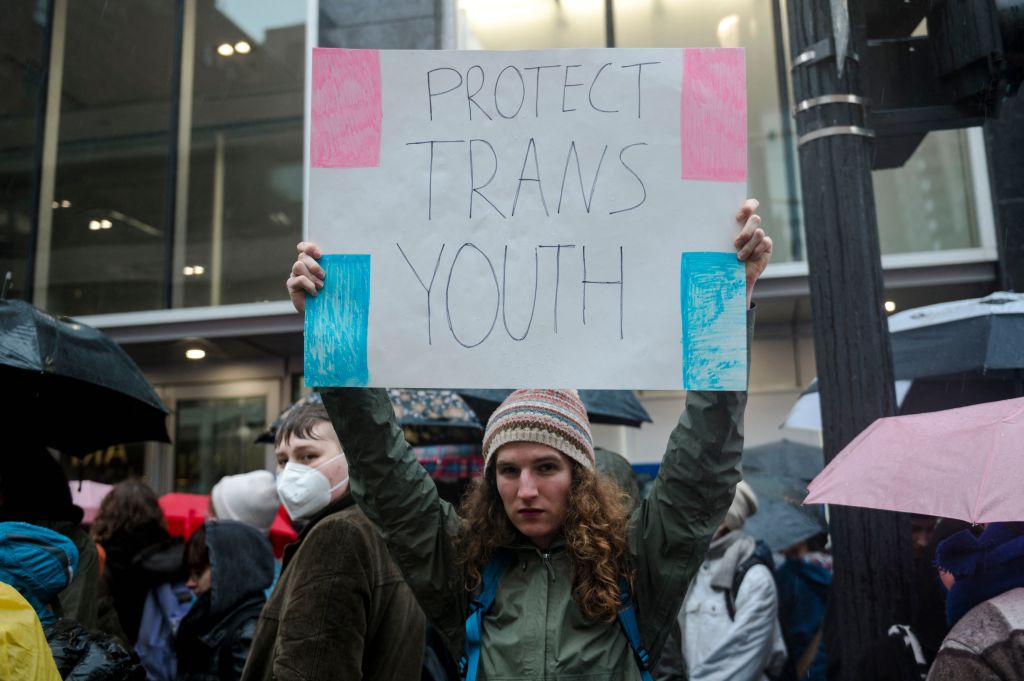
The lawsuit argues the White House is overstepping its authority by targeting providers who treat minors.
Featured image by ANDREJ IVANOV / AFP
Nineteen states and the District of Columbia are suing the U.S. Department of Health and Human Services and Health Secretary Robert F. Kennedy Jr. in an effort to block a sweeping federal plan that would effectively ban access to gender-affirming care for minors.
The lawsuit, filed in U.S. District Court in Eugene, Oregon, challenges a recent declaration issued by HHS that labels gender-related treatments for children and adolescents as unsafe and ineffective. The declaration also warns that health care providers who continue offering this care could be excluded from Medicare and Medicaid, a move that would place enormous financial pressure on hospitals and clinics nationwide.
Oregon Attorney General Dan Rayfield, who filed the suit, said the declaration oversteps federal authority and misrepresents established medical consensus. “The declaration falsely claims that certain forms of gender-affirming care are ‘unsafe and ineffective,’” Rayfield said in a statement. He added that the policy “threatens to punish any doctors, hospitals, and clinics that continue to provide it with exclusion from the federal Medicare and Medicaid programs.”
Related: House Passes Bill Criminalizing Gender-Affirming Care For Trans Youth
Joining Rayfield are Pennsylvania Governor Josh Shapiro and the Democratic attorneys general of California, Colorado, Connecticut, Delaware, Illinois, Maine, Maryland, Massachusetts, Michigan, Minnesota, New Jersey, New Mexico, New York, Rhode Island, Vermont, Wisconsin, Washington and Washington, D.C.
At the center of the dispute is Kennedy’s announcement that Medicare and Medicaid payments would be halted for any provider offering gender-affirming care to minors. The states argue that this action exceeds the secretary’s legal authority and violates federal law, including requirements under the Administrative Procedure Act that mandate public notice and comment before major policy changes take effect.
New York Attorney General Letitia James, who helped lead the coalition, sharply criticized the move. “Secretary Kennedy cannot unilaterally change medical standards by posting a document online, and no one should lose access to medically necessary health care because their federal government tried to interfere in decisions that belong in doctors’ offices,” James said in a statement.
Related: Transgender NSA Employee Challenges Trump Executive Order In Federal Court
Medical experts and advocacy groups have also strongly pushed back. Major organizations including the American Medical Association and the American Academy of Pediatrics maintain that gender-affirming care is evidence-based, medically necessary, and in some cases lifesaving for transgender youth.
More than two dozen states have enacted laws restricting or banning gender-affirming care for minors, and the Supreme Court recently upheld Tennessee’s ban. Medicaid coverage for the care exists in fewer than half of states, leaving access highly dependent on geography.
For the states bringing the lawsuit, the issue goes beyond health policy and into the question of who has the authority to set medical standards. As the complaint argues, regulating the practice of medicine has traditionally been the role of states, not the federal government. The outcome of this case could determine whether the Trump administration’s plan reshapes access to gender-affirming care for young people nationwide.