

People Think My Wife Is My Twin: The Subtle Homophobia Of Being Seen As ‘Family’, But Not Married
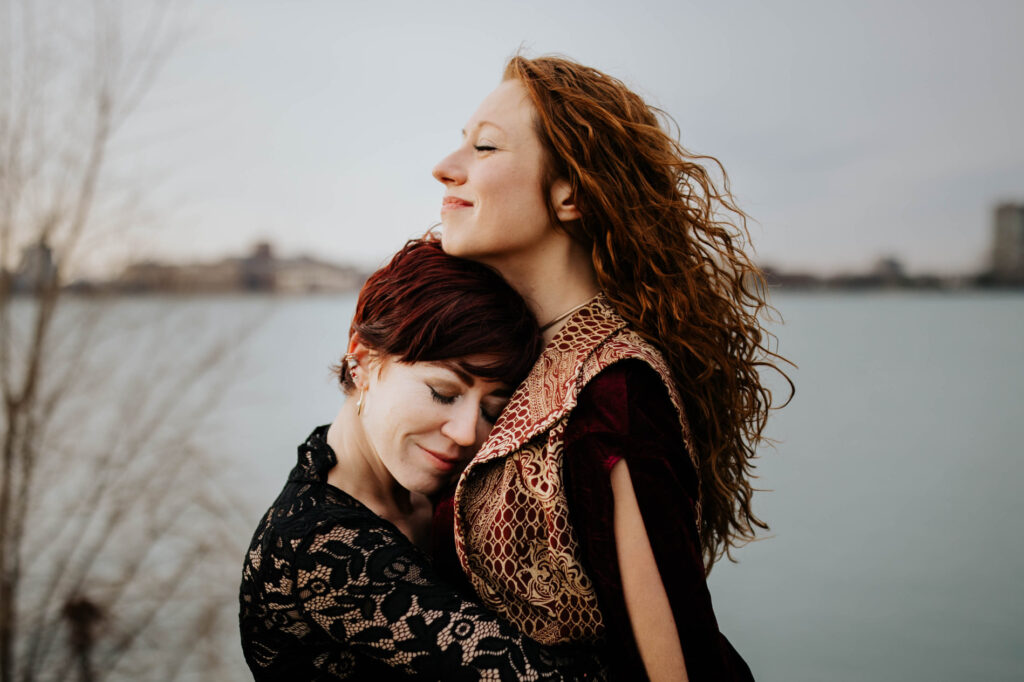
“Queer families are socially invisible or othered. Homophobia doesn’t always look like rejection or discrimination. Sometimes it just looks like misrecognition and assumption. And I want to be seen with my wife.”
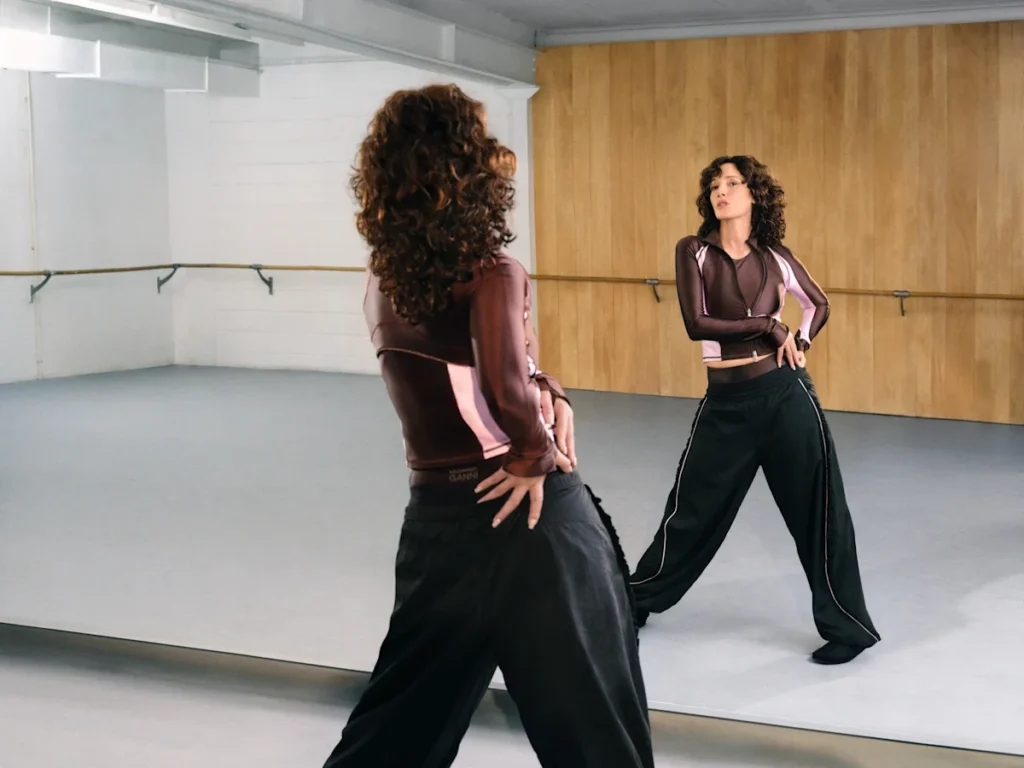
Featured Image: Caedy Convis Photography
“Are you two sisters?” The first time my wife, Jess, and I were asked this question was six years ago, when we first started dating, it made Jess and me look at each other, suppressing eye rolls.
“No, she’s my girlfriend,” I said.
“But you look so much alike!” exclaimed the man, doubling down. “You both have red hair!”—never mind that both our red hairs were from a bottle. I was Little Mermaid crimson to Jess’s more subtle ginger-brown. “Still not sisters,” I responded with a sigh.
Just last week, a man in our neighborhood coffee shop assumed we were twins as he spoke to us. Not asked if we were. Assumed.
When Jess and I are out in public, even when we’re out with all our kiddos, we are constantly assumed to be sisters. But when Trow—the kids’ biological dad, with whom Jess and I coparent—is out in public with me, people constantly assume he’s my husband. Not my brother, not my friend, not even my boyfriend—but my husband.
This isn’t a one-off. It happens repeatedly in different contexts, even after subtle or overt signals about my relationship status with Jess like touching each other, calling the other “babe,” or wearing wedding rings while out with our children. These assumptions are rooted in heteronormativity—what’s normal is a man and woman together, and anything else is deviant or “other.”
They’re based in homophobia. They marginalize and invalidate my queer marriage. Microaggressions like these wear me down, like water slowly and inevitably dripping on a rock. It feels like death by a thousand cuts. The mental impact is small but relentless.
At a Pride event one year, Jess and I walked into a club. I pulled out my wallet to pay for us, and the person checking us in asked us if we were sisters! At a Pride event! Homophobic assumptions aren’t solely relegated to straight people; even queer people have to battle with how ingrained these beliefs are.
It speaks to a cultural instinct to read intimacy between women as familial rather than romantic. Even when we are visibly partnered, people default to the version of us that makes sense in heterosexual expectations.
I’m sure these commenters mean well. But it’s exhausting to be constantly assumed to be one thing, and be forced to constantly choose between correcting inaccurate assumptions or just nodding along to falsehoods. I have to repeatedly “out” myself, or resign to invisibility.
When I was pregnant, these assumptions stung a lot more. Jess and I both conceived at the same time so we could have pseudo twins (although joke’s on us: I conceived actual twins, which gave us pseudo triplets due 10 days apart). Either Jess or Trow went with me to most of my appointments — which were frequent because I had a medically complex pregnancy. When Jess went with me, medical practitioners were great about asking as to the nature of our relationship, rather than assuming. But when Trow was with me, most practitioners reverted to assuming he was my husband.
This assumption made discussing my wife very awkward when we talked about my support system or my home life during the appointment. Even with a note in my medical chart that I’m queer and married to a woman, these assumptions still happened. And they made me feel sad, isolated, and like I had to constantly come out, every single time. It wore me down and was a constant irritant, like a pebble in a shoe.
One of the most ridiculous familial misassumptions came in the waiting room of a doctor’s appointment. Jess and I were there with all three babies; both of us were breastfeeding as we waited. An older lady waved her hand at us and said, “So many kids! Are you the grandma?” And she indicated Jess.
My jaw dropped open; it’s a good thing she wasn’t talking to me because I was speechless. Before Jess answered, the woman audibly gasped and, pointing at Jess breastfeeding, exclaimed, “But how are you doing that!?” I agree, it would be quite shocking to see a grandmother breastfeeding! Jess corrected the woman with far more grace than I would have been able to muster.
The assumption that two women aren’t married became legitimately dangerous during my family’s application to Medicaid. Jess’s case agent had no problem approving her for health insurance, but my case agent didn’t understand our situation. I was marked down as an unmarried woman who needed to provide the information of her baby’s biological father so the state could go after him for child support, rather than a woman married to a woman whose children are legally considered a product of her marriage.
As a result of this snafu–which wouldn’t have happened if the case agent had just taken my application at face value – I was uninsured for several months. As a disabled parent, this left me without medical care or prescription coverage, which had a severe impact on my health.
This relentless focus on compulsory heterosexuality fatigues me. Queer families are socially invisible or othered. Homophobia doesn’t always look like rejection or discrimination. Sometimes it just looks like misrecognition and assumption. And I want to be seen with my wife. She’s not my sister; she’s my spouse. And that should be just as easy for people to see.