

Iconic Lesbian Poets Everyone Should Know
During both Lesbian Visibility Week and National Poetry Month, we thought it was only appropriate to share this list of must-read lesbian poets.
April is home to both National Poetry Month and Lesbian Visibility Week, so we’ve decided to share some of our favorite lesbian poetry. Lesbian poetry and lesbian poets have been a core part of capturing the intimacies of our lives, communities, homes, and views of the world. Lesbian poetry published in print, shared online, and read from spoken word stages has been a core and important part of preserving lesbian lives in all of the diverse queered iterations.
Poetry uniquely has the potential to preserve and give voice to the edges of our marginalized life, love, bodies, and emotional connections outside of heteronormative expectations. For me, lesbian poetry has always been something to experience, to breathe and embody. It was something to read to our friends and lovers, to write late at night, and publish in zines. I first discovered lesbian poetry right as I came out as a teenager, and now decades later, I have continued to love and feel inspired by the art. Here are some of my favorite sapphic poets.
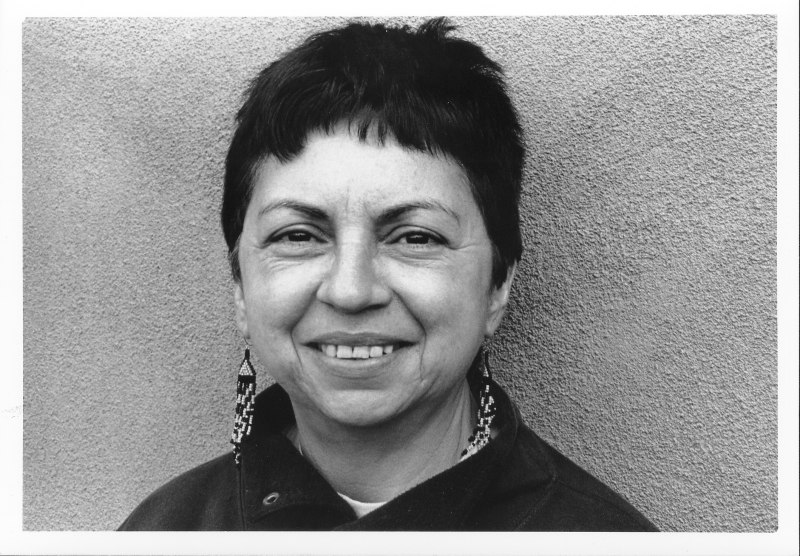
Gloria Anzaldúa (1942–2004)
“Write with your eyes like painters,
excerpt from “Speaking in Tongues, A Letter to Third World Women Writers” from This Bridge Called My Back: Writings by Radical Women of Color
with your ears like musicians, with your feet like dancers.
You are the truth sayer with quill and torch.
Write with your tongues on fire.”
A social justice leader and Chicana lesbian feminist poet, Gloria Anzaldúa’s poetry shaped feminist and queer theory as well as poetry through her work that centered queer Women of Color. Her work is best known for inhabiting the intersection of personal identity and social justice. Anzaldúa’s feminist theory work wove in poetry in powerful ways that, as a Women’s Studies/Feminist Studies major, drew me in. Anzaldúa is perhaps best known for having co-edited the seminal feminist anthology This Bridge Called My Back: Writings by Radical Women of Color with fellow Chicana feminist Cherrie Moraga.
Angel Nafis (1988—)
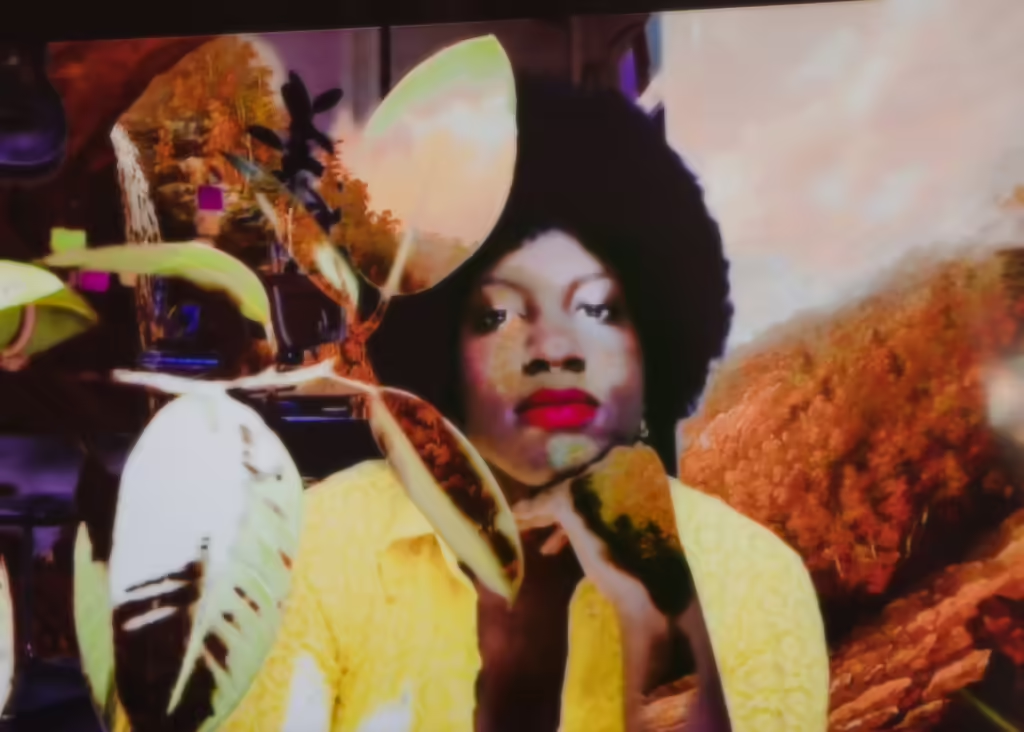
“I yell down to who sees me now & is Hey Boo-ing
excerpt from Omen To Get Your Ass Up
rushing past a zillion strangers with her take-out chicken
to the door of my building no matter
the dice game or puddles of piss
She says a walk around the hood
got her whole situation right
so now it’s clear who I can be
Summoning her is summoning me
Here I am glad to be another loud mouth
through an open window exercising the right
to be beloved I am saved for a moment
the suspended heaven of being recognized
Hollering
Ashley! Ashley! Ashley!”
Author and poet, Angel Nafis’ work is visceral and captivating. Nafis’ poetry is attention grabbing, and always takes you somewhere new. These are poems that captivate and make you see the world, even your neighborhood street corner, in a new way. My favorite part of Nafis’ work is how intimately accessible it is, and the way it speaks to the realities of daily life.
June Jordan (1936—2002)
“Even tonight and I need to take a walk and clear
excerpt from Poem about My Rights
my head about this poem about why I can’t
go out without changing my clothes my shoes
my body posture my gender identity my age
my status as a woman alone in the evening/
alone on the streets/alone not being the point/
the point being that I can’t do what I want
to do with my own body because I am the wrong
sex the wrong age the wrong skin and
suppose it was not here in the city but down on the beach/
or far into the woods and I wanted to go
there by myself thinking about God/or thinking
about children or thinking about the world/all of it
disclosed by the stars and the silence:
I could not go and I could not think and I could not
stay there
alone
as I need to be
alone because I can’t do what I want to do with my own
body and
who in the hell set things up
like this”
The strength and unforgettable qualities of June Jordan’s poetry come from the ways in which she unflinchingly explored themes of race, gender, sexuality, and social justice. Jordan wrote poetry that was accessible and got to the immediate need for action. Jordan was a prominent voice in the feminist and civil rights movements, founded the Poetry for the People program at UC Berkeley and authored 25 books. I remember first discovering Jordan’s poetry as an undergraduate, and I was captivated by the way her poetry never shied away from hard truths and realities.
Audre Lorde (1934—1992)
“And when the sun rises we are afraid
it might not remain
when the sun sets we are afraid
it might not rise in the morning
when our stomachs are full we are afraid
of indigestion
when our stomachs are empty we are afraid
we may never eat again
when we are loved we are afraid
love will vanish
when we are alone we are afraid
love will never return
and when we speak we are afraid
our words will not be heard
nor welcomed
but when we are silent
we are still afraidSo it is better to speak
excerpt from “A Litany for Survival”
remembering
we were never meant to survive.”
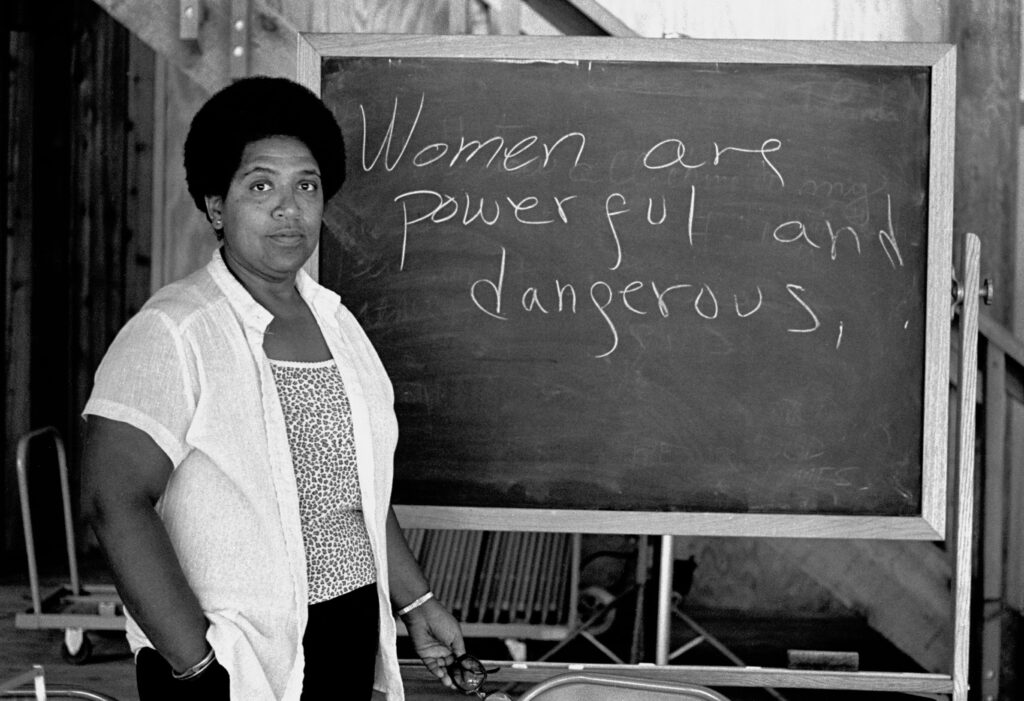
Audre Lorde’s poetry is always a reminder that we are defining and creating ourselves in conversation with our history and the world around us—a message that feels especially relevant and important to think about during Lesbian Visibility Week. Lorde was a Black lesbian feminist poet and activist whose life and writings centered on intersectional feminism, LGBTQ+ culture, and civil rights. Lorde’s most influential and well-known works include “The Master’s Tools Will Never Dismantle the Master’s House,” Sister Outsider, and Zami: A New Spelling of My Name. Much of our contemporary understanding of justice and intersectionality globally and within the lesbian community comes directly from Lorde’s presence and work.
Minnie Bruce Pratt (1946—2023)
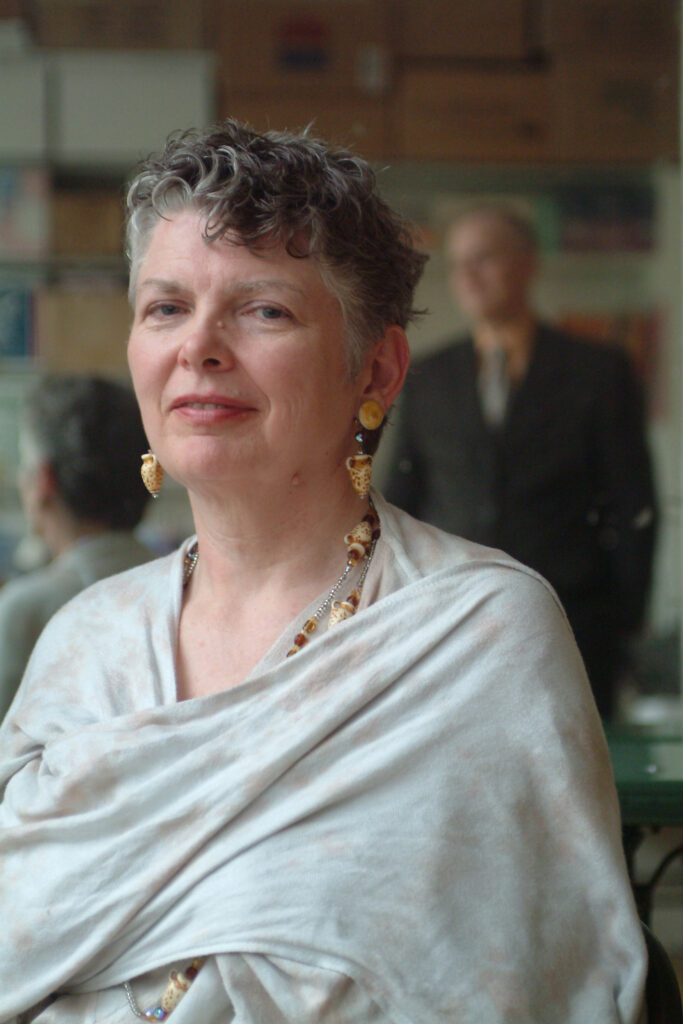
“I’m in a town where twenty years ago a dyke couldn’t buy a dildo but this hadn’t kept some mighty queer fucking from going on.”
excerpt from S/He
Minnie Bruce Pratt’s memoir s/he was one of the first times I was exposed to femme lesbian writings. Pratt’s poetry was accessible and vibrant as she unpacked themes of sexuality, desire, motherhood, class, and identity. Pratt’s poetry gave voice to the heartache and joy of lesbian life, especially navigating homophobia and the way her queerness was weaponized against her as a southern lesbian mother. Pratt also wrote extensively about her partnership with author and activist Leslie Feinberg, and her passion for and connection with Butch/Femme dynamics.
Eileen Myles (1949—)
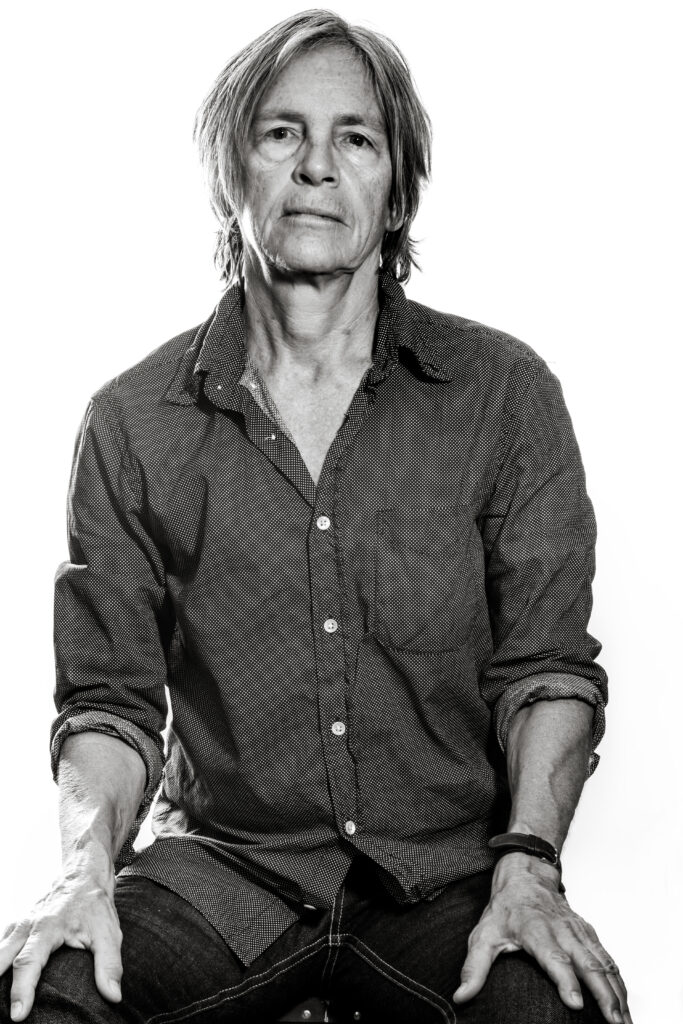
“What I started to understand was that the poem was made out of time–past, present, and future. It lives in the present, it breathes there and that’s how you let anyone in. I think people can feel this accessing of time in poetry very readily. As soon as the poem ceases to be about anything, when it even stops saving things, stops being such a damn collector, it becomes an invite to the only refuge which is the impossible moment of being alive.”
excerpt from Inferno:(a Poet’s Novel)
Eileen Myles is the author of twenty volumes of poetry and fiction. I especially appreciate the way that Myles explores themes of sexuality, sex, relationships, and also a deep love of dogs. From their earliest work performing with Michelle Tea’s Sister Spit spoken word group in the ’90s, to their more contemporary work Myles’ words are wonderful on the page, but there is also something special about hearing them read that pulls you into their poetry. You can listen to three poems here.
Fatimah Asghar (1989—)
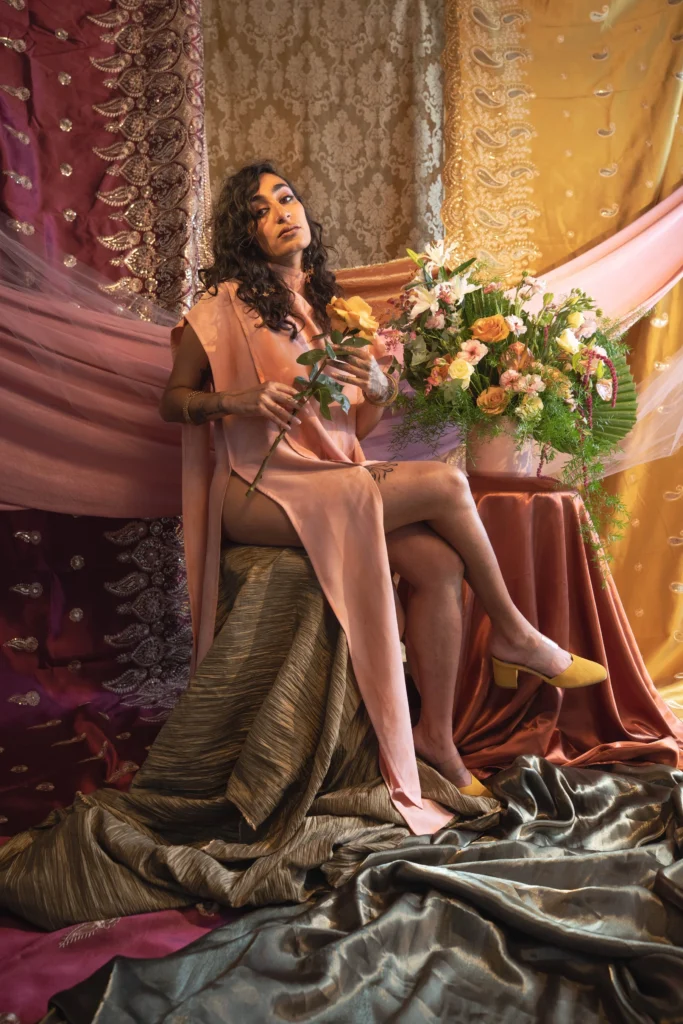
“these are my people & I find them on the street & shadow through any wild all wild my people my people”
excerpt from If They Come for Us
Fatimah Asghar is a poet, author, and filmmaker who plays with form and genre to tell powerful stories of belonging, family, and survival. In her debut poetry collection, Asghar explores themes of sexuality, race, identity, and violence. A Pakistani-American orphan, Asghar experiments with form to weave a uniquely personal collection exploring violence and trauma as well as joy and survival. Her poem “If They Should Come for Us” which you can read here, and listen to here, is more timely than ever.
Andrea Gibson (1975—2025)
“We were chubby-faced school kids,
excerpt from “Crab Apple Pirates”
Snickers bar windpiped, crab apple pirates, backward-baseball-capped, knee-scraped snow angels, Dukes-of-Hazard dreamers, bumper-car-bodied
salamander catchers,
Michael Jordan believers.
I couldn’t fly, but my hang time was three minutes and ten seconds.
Smart kids were stupid.
Books were trees cut down.
I was a tomboy in love with Malcolm Cushion.
He had a birthmark in the shape of Canada on his left cheek.
The teachers didn’t trust him.
His mother was the accidental broken tooth in a bar fight.”
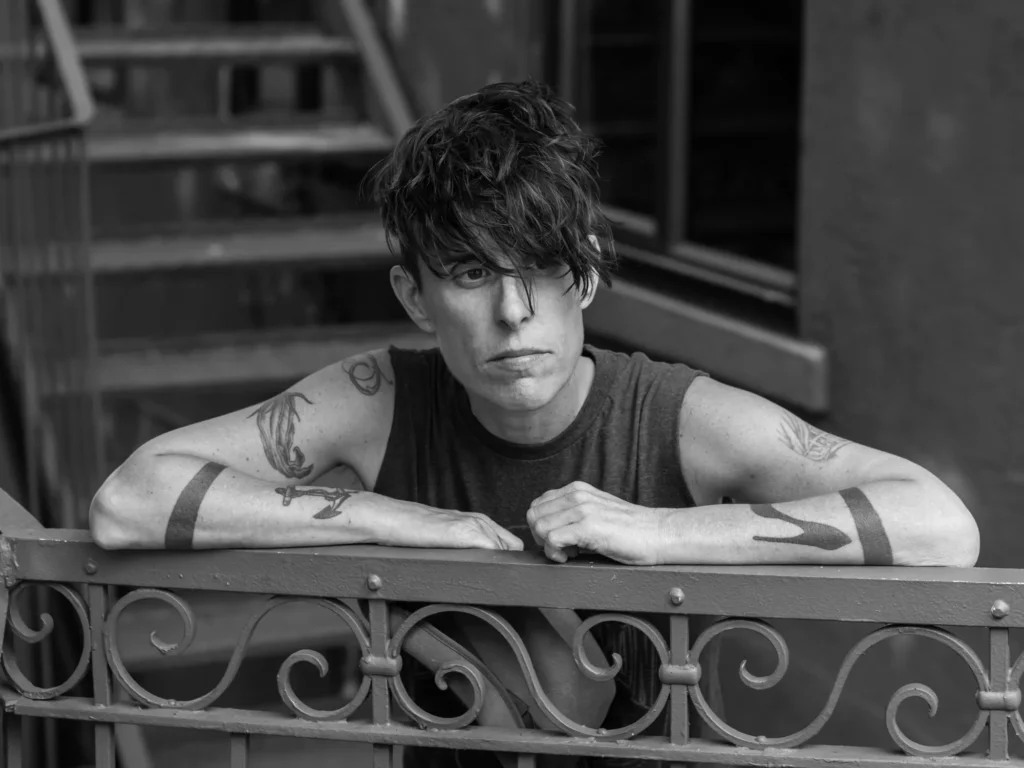
Nonbinary poet and spoken word performer, Andrea Gibson was the Poet Laureate of Colorado before their recent death after a battle with cancer. Gibson’s poetry wove together explorations of queerness, gender, politics, social justice and religion. Gibson’s work is particularly powerful when listened to. Gibson was one of the first poets I connected to first as a lesbian, and then rediscovered in the queer in-between places of gender that also felt like home to me.
Dorothy Allison (1949—2024)
“That summer I talked to death like an old friend, a husky voice whispering up from my cunt, echoing around my knees, laughing. that summer I did not go crazy but I wore
excerpt from “The Women Who Hate Me”
very close
very close
to the bone.”
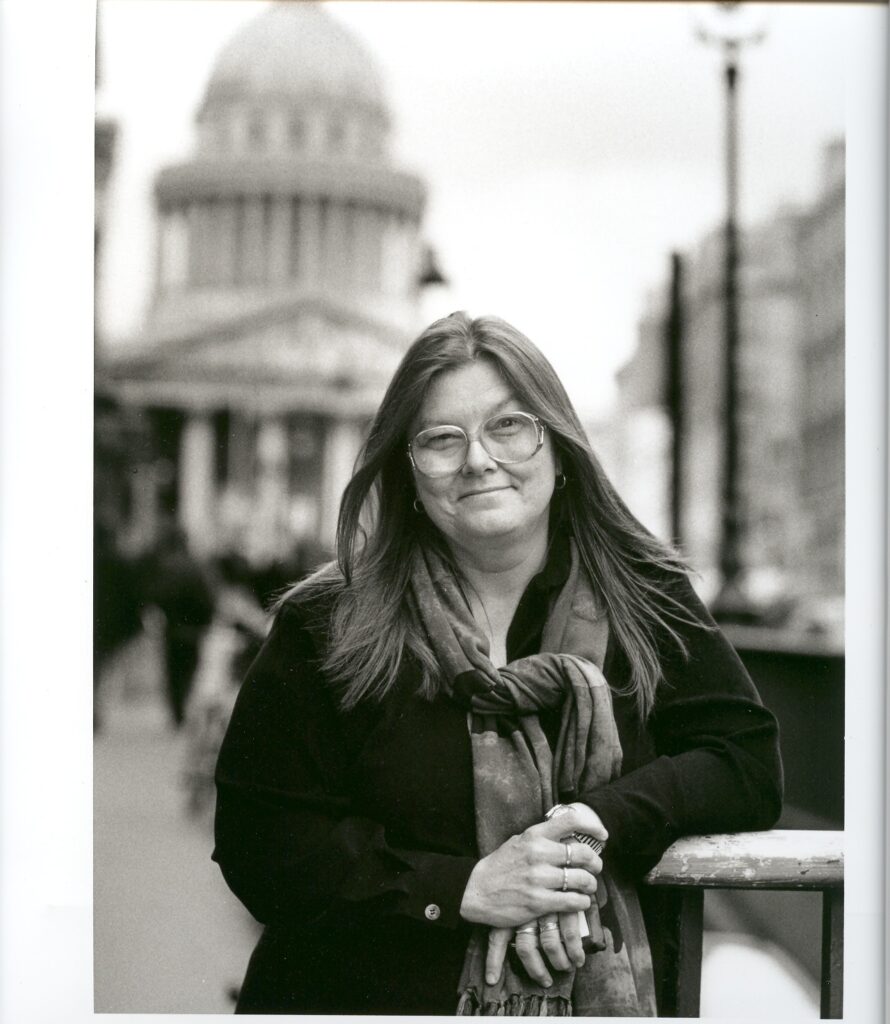
Dorothy Allison was a southern femme lesbian author and poet who wrote unflinchingly about sexual abuse, feminism, queerness, sex, and desire. Allison is well known for Bastard out of Carolina, which is undeniably an incredible novel, but I’ve always been very partial to her poetry. Allison’s poetry explored feminism both as an ideology and a movement, as well as her lived experiences as a poor, white southern lesbian.